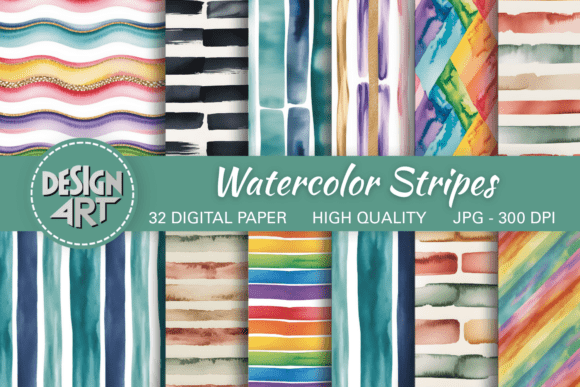
Watercolor Stripes Pattern Digital Paper: A Creative Resource for Modern Designers
Watercolor Stripes Pattern Digital Paper is a versatile design asset that brings the soft, fluid charm of watercolor art into digital formats. These patterns are crafted with hand-painted brush strokes and arranged in stylish stripe designs, offering a fresh and artistic aesthetic. Whether you're creating cards, posters, book covers, or sublimation products, this collection can elevate your work with a seamless, high-quality look.
Why Choose Watercolor Stripes Pattern Digital Paper?
This set includes ✨ 32 Watercolor Stripes Pattern JPG files ✨, each sized at 3072 x 3072 pixels and printed at a high resolution of 300 DPI. Such specifications ensure clarity and sharpness when used across various media, from print to digital displays. The patterns are ideal for anyone looking to add a subtle yet elegant touch to their projects without overwhelming the visual elements.
Designers often choose these patterns because they’re seamless, meaning they can be tiled effortlessly without visible edges. This makes them perfect for backgrounds, fabric prints, and other applications where continuity is key. The soft hues and organic textures mimic traditional watercolor techniques, giving digital creations a warm, handcrafted feel.
Common Mistakes When Using Watercolor Stripes Pattern Digital Paper
While these patterns offer incredible flexibility, there are some common pitfalls users might encounter:
- Ignoring Resolution Needs: Not all projects require the same level of detail. Using a low-resolution file on a large poster will lead to pixelation and poor quality. Always verify the required DPI before finalizing a design.
- Misunderstanding File Formats: Some users may not realize that JPGs don’t support transparency. If you plan to layer the pattern over images or text, consider using a compatible format like PNG or adjust your layout accordingly.
- Overcomplicating the Design: The beauty of watercolor stripes lies in their simplicity. Overloading a project with too many patterns or colors can dilute the effect and make the final piece appear cluttered rather than cohesive.
- Not Checking Color Accuracy: Colors on screen can differ from printed output. Before printing anything like invitations or wall art, test a small sample to ensure the colors match your expectations under real lighting conditions.
- Using Patterns Without Purpose: Simply adding a pattern for decoration doesn't always enhance the message or function of the product. Consider how the pattern supports the overall theme or purpose of your design.
How These Mistakes Can Impact Your Work
Choosing the wrong resolution or file type could result in unprofessional-looking prints or digital assets that don’t scale well. For example, if you use a standard web-resolution image (72 DPI) on a mug or planner, it may look blurry or distorted once printed.
Similarly, if you layer multiple Watercolor Stripes Pattern JPG files without understanding how color blending works, the outcome might clash instead of harmonize. This can affect presentation and reduce the visual appeal of your finished product, whether it's a card, scrapbook page, or digital banner.
Practical Tips to Avoid Errors and Maximize Creativity
To get the most out of your Watercolor Stripes Pattern Digital Paper, follow these best practices:
- Understand Your Project Requirements: Check if the platform or printer you're using demands specific resolutions or file types. For professional printing, especially for items like bags or wall art, stick to 300 DPI JPGs or convert to appropriate formats.
- Use Layers Wisely: In design software such as Photoshop or Canva, apply the pattern as an overlay or texture layer. Adjust opacity or blend modes to maintain readability and balance, particularly when used on text-heavy materials like planners or invitations.
- Test Print Before Finalizing: Always do a test print, even if it’s just a small swatch. This helps you see how the colors translate from digital to physical form and gives you time to make necessary adjustments.
- Stay Consistent with Style: Pair the watercolor stripes with fonts and colors that complement the soft, artistic vibe. Avoid combining them with overly bold or contrasting elements unless intentional for a modern contrast.
- Consider Licensing Rights: Make sure the Watercolor Stripes Pattern Digital Paper you purchase allows for the intended use—such as commercial projects like mugs or stickers. Some patterns are only for personal use, which could limit your creative potential.
Real-World Examples of Successful Use
A popular use case involves wedding planners who incorporate these patterns into invitation suites. By using a single watercolor stripe background with minimal text and floral accents, the invitations feel both romantic and refined.
Another great example is in the world of sublimation printing. Entrepreneurs selling custom tumblers or phone cases often find that the gentle, flowing lines of watercolor stripes blend beautifully with metallic finishes, creating a luxurious yet approachable look.
For educators and bloggers, using one of the patterns as a blog post header or in printable worksheets adds a unique touch that stands out while remaining professional. It helps establish a consistent brand identity across platforms.
What to Check Before You Buy or Download
Before purchasing or downloading your Watercolor Stripes Pattern Digital Paper, ask yourself a few key questions:
- Will I be using this for personal or commercial purposes? Ensure the license allows for the intended use.
- Do I need to modify the pattern in any way? If so, check if it comes in editable formats or if you'll need to use clipping masks or overlays in your design software.
- Are there enough variations included to suit my needs? With 32 different patterns, this set offers good variety, but confirm if more options are available for future projects.
- Is the file size manageable for my workflow? Large high-res files can slow down editing processes or consume significant storage space, especially if you're working on multiple projects simultaneously.
- Does the seller provide previews or samples? Reviewing a few examples ensures the style and quality meet your expectations before committing to the full set.
Better Approaches for Seamless Integration
Instead of applying a pattern randomly, take time to align it with your project's theme. For instance, if you're designing a planner for a wellness brand, pair the watercolor stripes with botanical illustrations and calming color palettes for a cohesive feel.
When using the patterns for digital print on fabric or paper, ensure the colors are desaturated slightly if needed, depending on the material’s texture. Darker substrates might absorb ink differently, altering the appearance of the pattern.
Also, remember that less is more. Try using the pattern as an accent rather than a full background. A small border or corner element can give your design depth without overpowering the content.
Maximizing Value and Versatility
With 32 Watercolor Stripes Pattern JPG files at 3072 x 3072 pixels, you have plenty of room to experiment. Here are a few ideas to spark creativity:
- Create a series of scrapbook layouts by alternating between light and dark stripe variations.
- Use the patterns for backgrounds in digital art to add dimension and interest without competing with the main subject.
- Incorporate them into stationery sets for planners, journals, or calendars to give a personalized, artistic flair.
- Try using the patterns for sticker designs or social media templates—they work especially well with minimalist aesthetics.
By treating the Watercolor Stripes Pattern Digital Paper as a foundational element rather than a decorative afterthought, you can achieve better results and maintain a professional look across all your creative outputs.
Final Thoughts
The right digital paper can transform ordinary projects into something memorable. Watercolor Stripes Pattern Digital Paper provides a beautiful and functional resource for creators of all levels. However, its effectiveness depends on thoughtful application and understanding of design fundamentals.
Take the time to evaluate your needs, avoid common mistakes, and explore the full range of possibilities. With a little planning and attention to detail, you can confidently integrate these patterns into everything from framed artwork to product packaging, knowing they’ll deliver a polished, artistic result every time.